The world has pledged to restrict global warming to 1.5 degrees Celsius above pre-industrial levels to stave off the most catastrophic impacts of climate change.
However, not only is this limit speeding out of reach — the world is currently on track for up to 2.9 degrees of warming by 2100. But the most alarming finding of the study, published Tuesday in the journal Communications Earth and Environment, is that 1.5 might not even be good enough to save the ice sheets.
Read the full story here:https://www.cnn.com/2025/05/20/climate/ice-sheets-sea-level-rise
But this is not new information, my friend, John Englander has written about this for a long time. Two books give background and what is needed to minimize sea level rise.
| Book Title | Author | First Published | Latest Edition | Focus Areas |
|---|---|---|---|---|
| High Tide on Main Street: Rising Sea Level and the Coming Coastal Crisis | John Englander | 2012 | 2nd Edition | Science of sea level rise, economic and societal impacts, adaptation strategies |
| Moving to Higher Ground: Rising Sea Level and the Path Forward | John Englander | 2021 | N/A | Further guidance on adaptation and planning |
High Tide on Main Street remains a foundational work on understanding and preparing for the realities of sea level rise. The updated second edition ensures readers have access to the most current science and practical advice for adaptation, making it a crucial resource for anyone concerned about coastal futures
And there is more: https://sealevelrise.org/forecast/
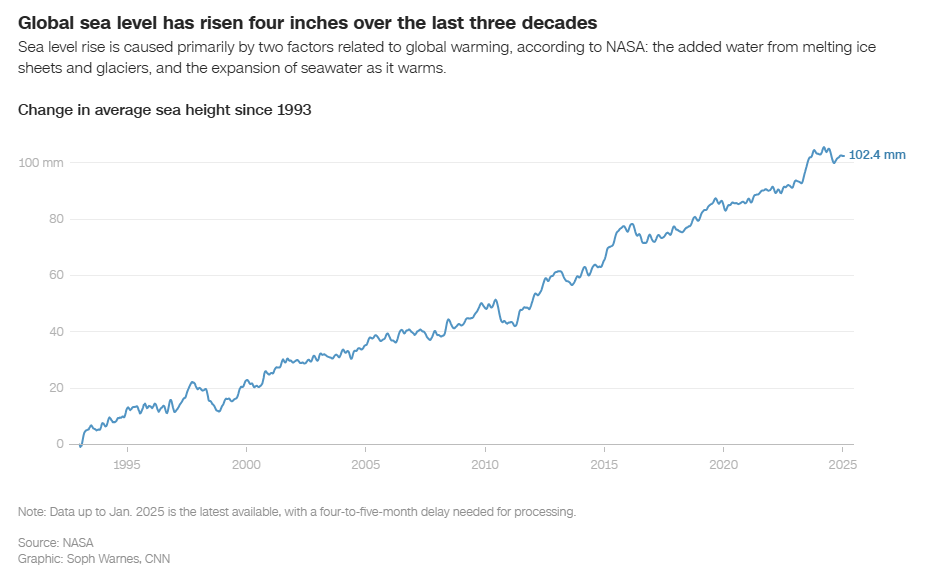
Sea level has risen over 6 inches nationally since 1950, but recently, its rate of increase has accelerated. In the last five years, sea level has risen 66% faster than the historical rate, and is now rising by an average of one inch every five years. While it took 60 years for the sea level to rise about 6 inches nationally, scientists now forecast that in just the next 20 years, the sea will have risen by another 6 inches.
 Ron's Musings
Leave a comment